 Mixing
Why robots can't grab your work - at least not yet
 GETTY IMAGES
Madaline is the first one.
As early as 1959, she solved a thorny problem with extraordinary wisdom: the echo on the telephone line. At that time, the sound of each call in the long-distance call would be reverberated, causing great trouble for the caller.
Medellin was able to identify the same input and output signals and then electronically remove the echo, solving this problem. This simple solution is still in use today. Of course, Medellin is not a human, but a multiple adaptive radiant neuron system, abbreviated as "Madaline." This is the first time that artificial intelligence has been applied in the field of work.
Today, it is generally believed that smart computers will take away our jobs. Before your breakfast is finished, it will have completed your week's workload and they will not rest, drink coffee, or take pensions. Do not sleep. But in fact, although many jobs will be automated in the future, at least in the short term, this new breed of smart machines is more likely to work with us (rather than replace humans).
- How long will your job be replaced by a machine?
- Never fall into the hands of robots
- Will robots take away your job?
 GETTY IMAGES
Although artificial intelligence machines have made great achievements in many fields, such as prevention of fraud, even cancer diagnosis is more reliable than doctors. However, today's most sophisticated artificial intelligence machines are also far from the general human brain.
A McKinsey report in 2017 states that under the existing technology, only 5% of the work can be fully automated, and approximately 1/3 of the jobs in 60% of the jobs can be completed by robots.
Don’t forget that not all robots use artificial intelligence—some are useful and many are not. The problem is that hindering the intelligent robots from taking over the problems of the world through artificial intelligence is precisely why they work with humans very badly. Google’s photo identification software used to identify black faces as orangutans. Artificial intelligence machines can't completely customize goals, solve problems, or even use basic common sense. These skills, which these new generation machine workers lack, are for humans. That is, it is the most dull, but it is also easy.
- AI can also make "low-level mistakes" after being fooled
- The real risk of artificial intelligence
- The biggest challenge facing artificial intelligence is not technology?
Therefore, before you are disheartened, you need to understand the rules for working with new robotic colleagues.
Rule 1: The robot does not think like humans
While making a long-distance call with Medellin, the British Hungarian philosopher Michael Polanyi is pondering the issue of human intelligence. Polanyi realized that some human skills, such as the use of precise grammar, can be easily summarized into rules and explained to others, while others cannot.
Humans can unconsciously use so-called hidden powers. In Polanyi's words, "humans know more than they can." This includes cycling and kneading, as well as higher levels of practical ability. Well, if we do not understand the rules, we cannot teach the rules to a computer. This is Polanyi's paradox.
To solve this problem, calculator scientists did not attempt to reverse the design of human intelligence, but instead developed a completely new way of thinking for artificial intelligence - thinking with data.
Rich Caruana, a senior researcher at Microsoft Research, said: "You might think that the principle of artificial intelligence is that we first understand humans and then construct artificial intelligence in the same way, but this is not the case." As an example, we built our aircraft long before we had a detailed understanding of the principle of bird flight. The aerodynamic principles used were different, but today our aircraft flies higher and faster than any animal.
Like Maderin, many artificial intelligence subjects are "neural networks," and they learn by constructing mathematical models by analyzing large amounts of data. For example, Facebook uses about 4 million photos to train Deep Face, a face recognition software. DeepFace looks for pattern samples in different images labeled as the same person and eventually learns face matching with a success rate of 97%.
 GETTY IMAGES
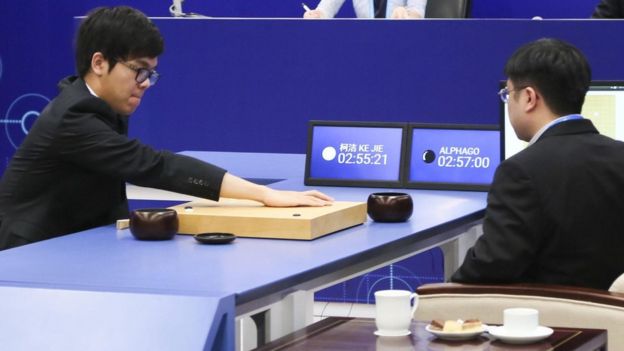
Artificial intelligence machines like DeepFace are Silicon Valley’s stars of the future and have surpassed their developers in terms of driving, voice recognition, text translation, photo annotation, etc. It is expected that they will also expand into other fields including medical and financial.
- Why does an artificial intelligence company keep squeezing glass?
- The Last Value of Human Beings in the Age of Artificial Intelligence
- Unknown artificial intelligence applications
Rule 2: Robots and new friends are not absolutely reliable, they also make mistakes.
However, this kind of data-dependent thinking method may also make a big mistake. For example, an artificial neural network once recognized the 3D printed turtle as a rifle. Because this program cannot be conceptually reasoned, it does not think "this thing has scales and shells so it may be only a turtle." Instead, they are thinking based on patterns—in this case, a visual pattern in pixels. Therefore, changing a certain pixel in the image, a reasonable answer may turn into nonsense.
Moreover, they do not have the necessary common sense in their work and cannot apply existing knowledge to new situations.
DeepMind artificial intelligence is a classic case. In 2015 DeepMind was ordered to operate the classic arcade game Pong and scored high points. As you can imagine, it defeated human players in a few hours, and it also developed a new way to win. But let it play another similar game, Breakout, and artificial intelligence has to learn from scratch.
The development of artificial intelligence's ability to transfer learning has become a major area of research. For example, a system called IMPALA has been able to transform what is learned in 30 scenarios.
 GETTY IMAGES
Rule 3: Robots Cannot Explain Their Decision
The second issue of artificial intelligence is a modern version of Polanyi paradox. We do not fully understand the human brain's learning mechanism, so we let AI think in a statistical way. Ironically, we now know very little about how artificial intelligence thinks, so we have two sets of unknown systems.
This is often referred to as the "black box problem" - you know the data you entered, and you know the result, but you don't know how the box is drawn. Caruana said, "We now have two different kinds of intelligence, but neither of us can fully understand it."
Artificial neural networks have no language ability, so they cannot explain what they are doing and why, and there is no common sense like all artificial intelligence.
 GETTY IMAGES
Decades ago, Caruana imported medical data into an artificial neural network, including symptoms and its consequences, to calculate how much the patient's risk of dying on any day would allow the doctor to take preventive measures. The results seemed to be good until one night a graduate student at the University of Pittsburgh discovered the problem. He used a simpler algorithm to process the same set of data, one by one, to study the neural network's diagnostic logic. One of the diagnoses was "If you have pneumonia, it is good for you to have asthma."
Caruana said, "We went to the doctor and they said, 'This is too bad. You need to fix it'." Asthma is an important risk factor for pneumonia because both can affect the lungs. People never know how this smart machine came to the conclusion that asthma is beneficial to pneumonia. One explanation is that patients with a history of asthma initially suffer from pneumonia and will see a doctor as soon as possible. This may artificially increase their survival rate, so artificial intelligence mistakenly concludes that asthma is helpful for pneumonia.
As artificial intelligence is increasingly used in public welfare, many industry experts are increasingly concerned. This year, the new EU regulations came into force, empowering individuals to explain the logic behind artificial intelligence decisions. At the same time, the Defense Advanced Research Projects Agency (DARPA), the research arm of the US military, invested 70 million U.S. dollars to study artificial intelligence that could explain its behavior.
David Gunning, head of Darpa's project, said, "In recent times, the accuracy of the system has been qualitatively improved. But the problem is that these systems are too vague and complicated, we don't know why it recommends something, or Some action in the game."
Rule 4: Robots may be biased
There is growing concern that some artificial intelligence operations may occasionally harbor conscious biases such as gender discrimination or racial discrimination. For example, there was recently a piece of software to assess the likelihood of a prisoner committing a crime again. It is twice as harsh on black people.
This depends entirely on how artificial intelligence is trained. If the data they receive are flawless, their decision is likely to be correct, but most of the time people's biases are already in it. There are obvious examples in Google Translate. A researcher in the Medium magazine published last year pointed out that if the English translation of "He is a nurse, she is a doctor" is translated into Hungarian and translated back into English, the translator gives The opposite sentence: "She is a nurse, he is a doctor."
The translation machine received data training for one trillion webpage content, but it can only be used to search for pattern samples. For example, it found doctors mostly male and nurse female.
Another possible cause of prejudice is due to mathematical weighting (the weighting of parameters in mathematical calculations is called weighting). Like humans, artificial intelligence also performs a "weighted" analysis of the data - see which parameter is more important. An algorithm may think that the postal code is related to the residents' credit score (as has been the case in the United States), and this will result in discriminatory calculations against ethnic minorities because they may live in poorer communities.
More than just racial discrimination and gender discrimination, there will be discrimination that we have never imagined. The Nobel laureate economist Daniel Kahneman spent his whole life studying non-rational prejudices in human thinking. When he was interviewed by the Freakonomics blog in 2011, he explained this issue well. He said: "In essence, whether human or artificial intelligence, rules of thumb will create prejudice, but the empirical rules of artificial intelligence may not be the same as human experience."
The era of robots is coming, and will change the work of the future forever, but before they become more human, we need to guard them next to them. Incredibly, colleagues in Silicon Valley seem to have done a great job in this area.